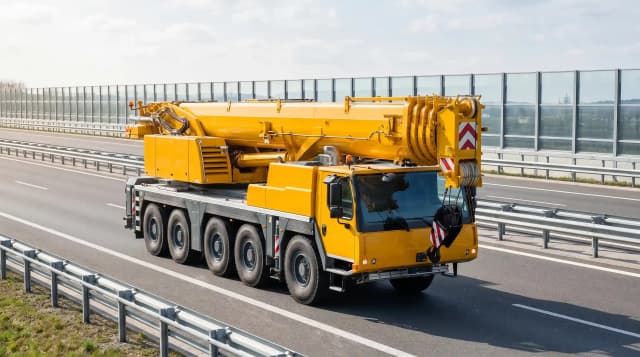

How to choose the right crane for your project
Selecting the right crane is critical to ensuring safe, efficient, and cost-effective lifting operations. Understanding project requirements, site conditions, and load specifications can help identify the most suitable crane solution.
- Resource TypeGuide
- Reading Time5 Minutes
- CategoryCrane Selection

Understanding crane selection for modern projects
Selecting the right crane is a critical step in ensuring the success of any lifting operation. From high-rise construction and infrastructure development to industrial maintenance and heavy equipment installation, every project has unique requirements that demand careful consideration. Factors such as load capacity, lifting height, working radius, ground conditions, and site accessibility all influence the choice of crane. By understanding these requirements early in the planning process, project teams can improve efficiency, enhance safety, and avoid costly delays.Different projects require different crane solutions. Mobile cranes offer flexibility and rapid deployment for a wide range of lifting tasks, making them ideal for infrastructure and industrial projects. Tower cranes are designed for large-scale construction sites where height and reach are critical, while spider cranes provide precision lifting in confined spaces where traditional cranes cannot operate. Selecting the appropriate crane type ensures optimal performance and minimizes operational challenges throughout the project lifecycle.
Site conditions also play a significant role in crane selection. Factors such as ground stability, available working space, access routes, surrounding structures, and environmental conditions must be carefully evaluated before any lifting operation begins. A crane that performs exceptionally well in an open construction site may not be suitable for a restricted urban environment or an active industrial facility. Proper assessment of these conditions helps engineering teams determine the safest and most efficient lifting approach.
Professional lift planning further enhances project success by identifying potential risks, optimizing crane positioning, and ensuring compliance with safety regulations. Through detailed engineering analysis and operational planning, lifting activities can be executed with greater precision while minimizing downtime and disruptions. This approach not only improves safety but also contributes to better project outcomes and resource utilization.
Key factors to consider
Load capacity
The crane must be capable of lifting the required load safely while maintaining stability throughout the operation.
Consider:
- Maximum load weight
- Load dimensions
- Center of gravity
- Dynamic loading conditions
Lift height
Determine the maximum height required for the lift, including clearance requirements and final placement position.
Typical examples:
- Low-rise construction
- High-rise buildings
- Industrial installations
- Infrastructure projects
Why proper planning matters
As lifting requirements become increasingly complex, access to accurate technical information becomes essential. Detailed specifications, load charts, CAD drawings, and engineering documentation provide valuable insights for project teams during the planning and execution phases. By leveraging these resources and consulting experienced lifting specialists, organizations can make informed decisions that support safe, efficient, and successful project delivery.Professional lift planning further enhances project success by identifying potential risks, optimizing crane positioning, and ensuring compliance with safety regulations. Through detailed engineering analysis and operational planning, lifting activities can be executed with greater precision while minimizing downtime and disruptions. This approach not only improves safety but also contributes to better project outcomes and resource utilization.
Site conditions also play a significant role in crane selection. Factors such as ground stability, available working space, access routes, surrounding structures, and environmental conditions must be carefully evaluated before any lifting operation begins. A crane that performs exceptionally well in an open construction site may not be suitable for a restricted urban environment or an active industrial facility. Proper assessment of these conditions helps engineering teams determine the safest and most efficient lifting approach.
Different projects require different crane solutions. Mobile cranes offer flexibility and rapid deployment for a wide range of lifting tasks, making them ideal for infrastructure and industrial projects. Tower cranes are designed for large-scale construction sites where height and reach are critical, while spider cranes provide precision lifting in confined spaces where traditional cranes cannot operate. Selecting the appropriate crane type ensures optimal performance and minimizes operational challenges throughout the project lifecycle. Every lifting operation presents unique challenges. From high-rise construction and infrastructure development to industrial installations, careful planning helps identify the optimal crane configuration and lifting methodology. By evaluating project requirements early, teams can minimize downtime, improve safety, and maximize operational efficiency.
Access technical resources
Our resource library provides expert guides, technical specifications, load charts, and engineering insights designed to support informed decision-making. Whether you're planning a complex lift or comparing crane models, these resources offer valuable information to help you achieve the best project outcomes.
Working radius
The distance between the crane's center and the load position directly impacts lifting capacity. Longer working radiuses generally reduce the crane's lifting capability, making proper planning essential.
Site conditions
Site constraints often influence crane selection more than load requirements.
Evaluate:
- Available space
- Ground conditions
- Access roads
- Nearby structures
- Utility lines
Why professional lift planning matters
Professional lift planning helps minimize risks and improve operational efficiency. A well-planned lifting operation can:
- Improve site safety
- Reduce downtime
- Increase productivity
Ensure regulatory compliance Engineering teams use advanced planning methods to determine crane positioning, lifting sequences, and risk mitigation strategies.
Conclusion
Selecting the right crane requires careful evaluation of project requirements, lifting parameters, and site conditions. By understanding these factors early in the planning process, organizations can improve safety, efficiency, and project outcomes.